EN
Book now
Book now
WhatsApp

Facial treatments

Wrinkles

Wrinkles form as part of natural ageing, as the skin loses collagen, elastin and hyaluronic acid, and sun exposure, stress, smoking or lack of rest speed the process up. Each type of wrinkle needs a different treatment.

Wrinkle treatments

Protocol

How the treatment works, step by step

At Mesomedic Clinic, every approach to wrinkles begins with a comprehensive medical assessment consultation. A precise diagnosis determines the right technique to achieve natural, long-lasting results.

  1. 01

    Diagnosis of static vs. dynamic wrinkles

    Initial medical review of your clinical history and direct assessment of the skin's signs.

  2. 02

    Choosing the optimal therapy

    Determining the indicated treatment: neuromodulators, hyaluronic acid fillers or biostimulation therapies.

  3. 03

    Medical application with precision technique

    The treatment is performed in the clinic by the medical team using high-precision techniques.

  4. 04

    Home care and prevention guidelines

    Personalised recommendations to protect your skin and make your results last as long as possible.

What it is

Over the years the skin deteriorates: it loses collagen, elastin and hyaluronic acid, and becomes less elastic. There are different types of wrinkles, and each forms in its own way.

Types of wrinkles

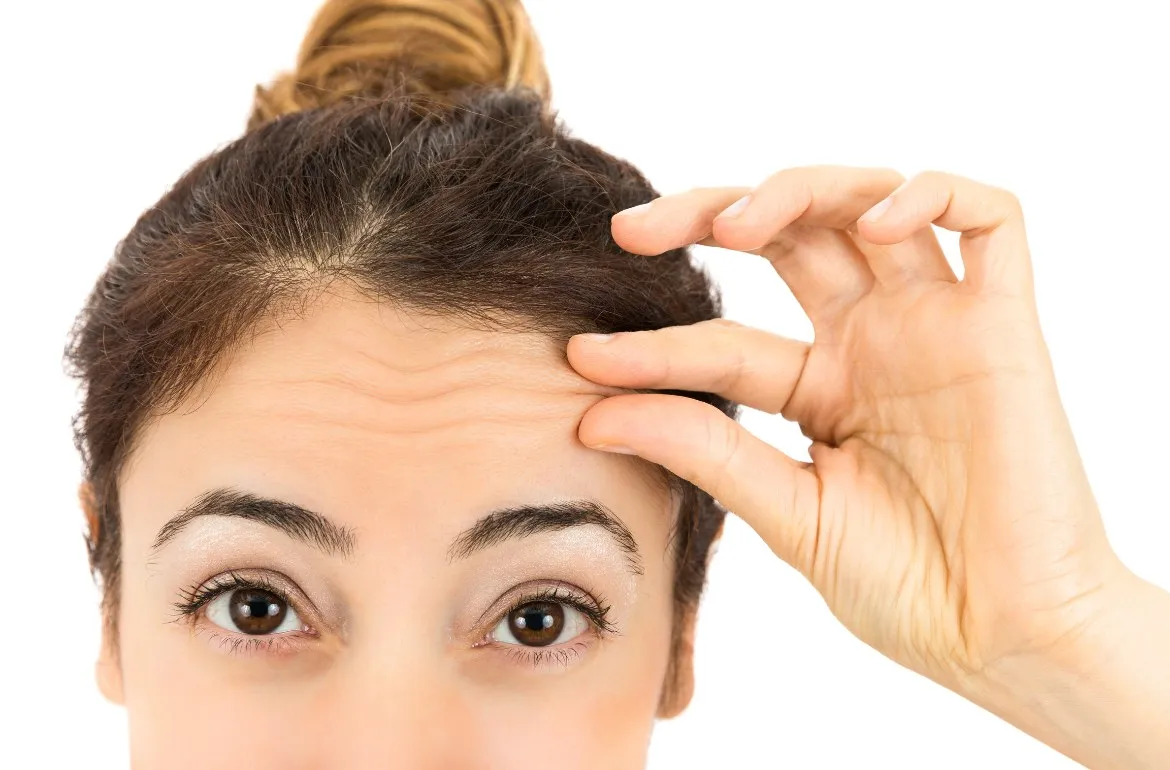
  1. Expression lines: these appear through the repeated contraction of the facial muscles. When you make the same expression again and again, temporary lines form on the face, and over time they can become permanent. Most start as fine lines and eventually turn into a deep wrinkle (a break in the skin). They are:
    • Horizontal forehead lines (frontalis muscle).
    • Frown lines between the eyebrows (procerus and corrugator muscles).
    • Crow’s feet, at the outer corners of the eyes (orbicularis muscle).
  2. Static wrinkles: natural folds in the skin that are present from birth but become more marked as we age, due to the loss of collagen and elasticity. The clearest example is the nasolabial fold.
  3. Gravitational wrinkles: these are linked to age. They form because of the loss of firmness in the ligaments that support the face, the thinning of the fat compartments and age-related muscle atrophy, and they become more pronounced with the changes in bone structure that come with ageing. Examples include marionette lines and the tear trough.
  4. Mixed wrinkles: these form from a combination of the causes above: expression, age and gravity.

Who it is for

Anyone who wants to soften or prevent wrinkles. Each area of the face is treated differently, but the key to a natural result is balance between the upper, middle and lower thirds of the face.

Upper third

Forehead, frown lines and crow’s feet. Neuromodulators are the recommended treatment to remove or temporarily soften these expression lines. Low-density hyaluronic acid can also be useful for anything from fine lines to very pronounced wrinkles.

Middle third

Dark circles, the tear trough, the nasolabial fold, the cheekbone and the zygomatic arch. For deep wrinkles and folds in this area we use 100% resorbable products such as hyaluronic acid, or collagen stimulators such as calcium hydroxylapatite, poly-L-lactic acid or polycaprolactone. In some cases we may also use a thread lift, and in others facial radiofrequency.

Lower third

The aim is to restore or redefine the facial oval and the jawline, correct marionette lines and the corners of the mouth, restore the lips (definition, hydration, volume and projection) and correct a gummy smile.

Neck and décolletage

The aim is to restore collagen, elasticity and firmness using collagen stimulators, skin redensification protocols and devices.

The session

Our medical team assesses your needs and aesthetic goals and draws up a treatment plan for you. Depending on the type of wrinkle, we combine different techniques:

With expression lines, prevention is the best approach: repeated use of neuromodulators helps prevent and reduce them.

Results

Each time neuromodulators are used again, expression lines tend to become finer and less visible than before, and they stop deepening. The aim of every plan is a natural, balanced result across the whole face.
Frequently asked questions

What causes expression lines?
Expression lines result from the repeated contraction of the facial muscles during habitual facial movements. When a person makes the same expression over and over, temporary lines form in the skin, and over time these can become permanent wrinkles. The most common areas are the forehead, the eye area (crow's feet) and between the eyebrows. Prevention matters most, mainly through the repeated use of neuromodulators, which help prevent and reduce these lines. With each treatment the lines tend to become finer and less noticeable.
What is the recommended treatment for expression lines?
The treatment of choice for expression lines is neuromodulators. They are used to relax the facial muscles and reduce the formation of lines in areas such as the forehead, the eye area (crow's feet) and between the eyebrows. They are effective and safe and, over time, they both prevent new lines and make existing ones less visible.
What are static wrinkles, and why do they become more visible with age?
Static wrinkles are natural folds in the skin that are present from birth but tend to deepen with age. This is mainly due to the loss of collagen and elasticity as we get older. A clear example is the nasolabial fold, which becomes more pronounced over time due to the loss of structural support and collagen. Several treatments are available for static wrinkles, including dermal fillers and collagen-stimulating procedures.
What are gravitational wrinkles, and what causes them?
Gravitational wrinkles develop as a result of the loss of firmness in the facial support ligaments, the thinning of the fat compartments, age-related muscle atrophy and changes in the facial bone structure that come with ageing. Examples include marionette lines and the tear trough. These wrinkles deepen over time as structural support is lost and facial anatomy changes. Treating them often requires more complex procedures, planned for each patient.
Which treatments are used for wrinkles in the middle and lower thirds of the face?
Treatment of the middle and lower thirds of the face is more varied and depends on each patient. The middle third includes dark circles, the tear trough, the nasolabial fold and the cheekbone. Here, resorbable products such as hyaluronic acid and collagen stimulators such as calcium hydroxylapatite, poly-L-lactic acid or polycaprolactone are used to treat deep wrinkles and facial folds. In some cases a thread lift or facial radiofrequency may also be used. In the lower third, the aim is to restore the facial oval, correct marionette lines and the corners of the mouth, and improve the lips (definition, hydration, volume and projection). Each area is treated on its own terms, looking for a balanced, natural result.
Are wrinkle treatments available at the Manacor clinic?
Yes. The Manacor clinic offers current wrinkle treatments, and each plan is designed for the patient after an assessment.

Book an assessment

The doctor assesses your case before any treatment and explains the options, what they involve and what results to expect.